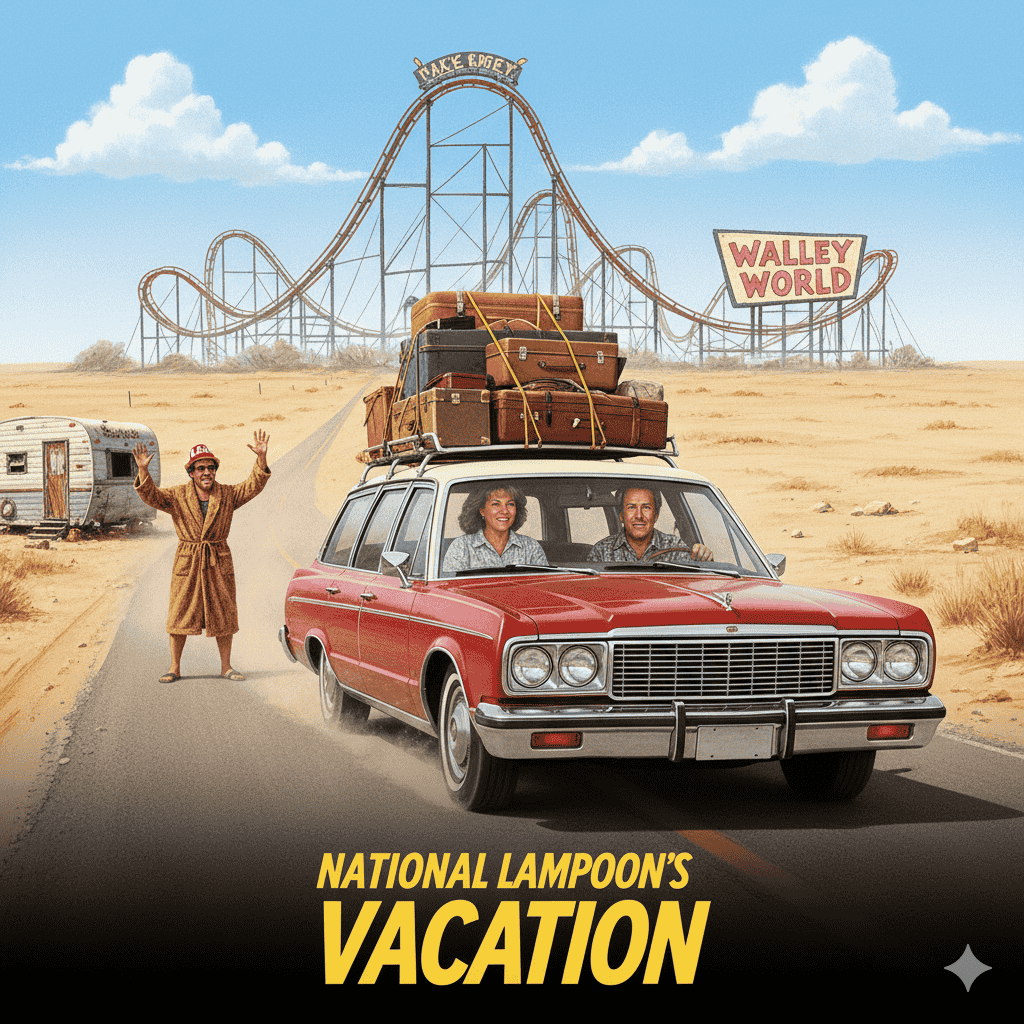
Some movies fade with time. Others age, but only as nostalgia pieces. And then there are rare films that somehow stay funny, relevant, and oddly comforting no matter how many years pass. Vacation national lampoon belongs firmly in that last category.
At first glance, it looks like a simple road-trip comedy from the early 1980s. A family piles into a station wagon, heads across America, and everything goes wrong. But that summary barely scratches the surface. What makes vacation national lampoon endure isn’t just the jokes—it’s how deeply human the chaos feels.
This is a movie about expectations, disappointment, stubborn optimism, and the strange hope we attach to family vacations. It exaggerates reality, sure, but it never feels fake. That’s why people keep returning to it, generation after generation.
The Origin of Vacation National Lampoon
Before Vacation National Lampoon became the iconic film franchise we know today, it started as a short story penned by John Hughes for National Lampoon magazine. Even in this early incarnation, the blueprint for hilarity was clear: a well-meaning but slightly clueless father, a seemingly simple plan for a family trip, and a cascade of inevitable misadventures that escalate in both absurdity and relatability.
Hughes’ story tapped into something quintessentially American—the dream of the perfect family vacation. It captured the excitement of road trips, the allure of theme parks, and the optimism of parents striving to create flawless memories for their children. Yet, Hughes didn’t shy away from the humor in the chaos. His writing highlighted that the very things families plan meticulously often spiral into unexpected, sometimes ridiculous situations.
When the story was adapted into the 1983 film, it arrived at the perfect cultural moment. America in the early ’80s was enthralled by the road trip as a rite of passage and a symbol of freedom. Theme parks were booming, and the idyllic image of a happy family driving off into the sunset was everywhere. Vacation National Lampoon didn’t reject that ideal; instead, it playfully punctured it, revealing the unpredictability, frustration, and outright absurdity lurking behind every family getaway.
The genius of the film and the story it originated from was its ability to rebel without cynicism. It didn’t mock families or belittle the concept of togetherness. Rather, it celebrated the messy reality of family life, laughing with audiences at moments they recognized all too well: a flat tire in the middle of nowhere, a hotel room that falls far short of expectations, or a theme park that turns into a battlefield of patience and perseverance.
This narrative approach allowed Vacation National Lampoon to resonate with a wide audience. Parents saw themselves in Clark Griswold’s tireless quest for perfection, while children recognized the absurdity of being trapped in a car with their well-meaning but exasperating parents. By balancing rebellion with empathy, humor with heart, the film and the story that inspired it—became a touchstone of comedy, setting the stage for a franchise that would continue to entertain generations.
Clark Griswold: A Hero of Good Intentions
Clark Griswold stands as one of the most memorable and enduring father figures in film history. He isn’t suave, he isn’t particularly wise, and he certainly isn’t always right. He’s stubborn, relentlessly hopeful, and endlessly optimistic and that’s precisely why he resonates so strongly with audiences.
In Vacation National Lampoon, Clark’s belief is simple: if he plans meticulously and wants his family vacation enough, everything will magically fall into place. That mindset is both his greatest strength and his most glaring weakness. His unwavering optimism, even in the face of mounting disaster, is painfully relatable. We watch him navigate one calamity after another, from flat tires to hotel fiascos, and yet he continues to push forward, clinging to the hope that the next stop will finally deliver the perfect family experience.
The brilliance of Clark Griswold lies in his authenticity. He embodies the universal struggle of trying to control what cannot be controlled, of holding onto a vision of perfection even when reality refuses to cooperate. Every misstep, every exaggerated reaction, and every triumphant moment of small success invites the audience to laugh at him, yes but also to recognize a bit of themselves in his endless pursuit of family bliss.
We’ve all been Clark at some point. Perhaps it’s during a holiday trip that went off the rails, a birthday party that didn’t go as planned, or a project where nothing seems to go right. Clark Griswold doesn’t just entertain; he validates the messy, imperfect journey of trying to do right by the people we love. In doing so, he becomes a hero not because he succeeds, but because he never stops trying.
Why the Road Trip Still Works
Road-trip movies are notoriously difficult to pull off. Lean too heavily into chaos, and the story feels overwhelming; focus too little on conflict, and it risks becoming dull and forgettable. Vacation National Lampoon strikes a masterful balance by ensuring that every disaster is firmly rooted in character.
The blown tires, wrong turns, and awkward pit stops aren’t mere comedic set pieces they are natural extensions of the Griswold family dynamic. Each mishap exposes facets of the family’s personalities: Clark’s relentless optimism, Ellen’s patience under pressure, and the kids’ oscillating amusement and exasperation. These scenarios provide more than laughs; they reveal the heart of the family, their resilience, and their loyalty to one another despite setbacks.
It’s this grounding in character that allows the road trip to feel meaningful. The audience isn’t just watching random chaos unfold they are witnessing the Griswolds navigate challenges that feel relatable and authentic. Even when the journey goes spectacularly wrong, there’s a sense of purpose and connection, making the comedy resonate on a deeper, more enduring level. Vacation National Lampoon turns the road trip into both a literal and metaphorical journey, one where laughter and family bonds go hand in hand.
Humor That Comes From Truth
The comedy in Vacation National Lampoon doesn’t lean solely on witty one-liners or slapstick antics. Its brilliance lies in its grounding in reality situations that feel uncomfortably familiar. Whether it’s a dilapidated hotel room, an awkward encounter with strangers, or a meticulously planned itinerary that goes off the rails, the humor comes from authenticity.
Audiences laugh because they recognize themselves in these scenarios. We’ve all experienced a hotel room that looked perfect in photos but was anything but, or attempted to maintain a cheerful demeanor while inwardly cursing our choices. It’s in these moments of shared human frustration that the film finds its comedic heartbeat.
Vacation National Lampoon understands that the most resonant comedy often arises from disappointment, chaos, and the gap between expectation and reality. By tapping into these universal experiences, the film transforms the ordinary trials of family life into extraordinary moments of humor, making its laughs both genuine and timeless.
The Supporting Cast Matters
While Clark Griswold is undeniably the driving force of the story, Vacation National Lampoon succeeds because its supporting cast contributes meaningfully to the comedy and narrative. Ellen Griswold’s quiet endurance and subtle reactions provide a grounding counterpoint to Clark’s chaos, while the kids Rusty and Audrey bring layers of humor through their shifting attitudes and exasperation.
Even the briefest appearances by side characters add texture and unexpected comedic beats. Each interaction, no matter how small, either propels the plot forward or amplifies the humor, ensuring that no one feels extraneous. This careful attention to ensemble dynamics is part of why the film remains so engaging and continues to reward repeat viewings, offering new details and laughs each time you watch.
A Snapshot of Its Era—Without Being Trapped in It
It’s true that Vacation National Lampoon is very much a product of its time. The cars, fashion, and even the pacing are unmistakably early 1980s. Yet, what makes the film endure is its emotional core, which remains universal and timeless.
Families still bicker in the car, parents still overpromise, and vacations still collapse under the weight of expectation. While the visual and cultural details may evoke a specific era, the underlying experiences chaos, anticipation, disappointment, and connection are the same across generations.
This universality ensures that Vacation National Lampoon doesn’t feel dated. New audiences can watch the film today and immediately relate to the Griswolds’ struggles, laugh at their misadventures, and appreciate the timeless humor that continues to resonate decades after its release.
Why Audiences Keep Coming Back
One of the key reasons Vacation National Lampoon has such lasting appeal is the comfort it offers. Watching the film feels like slipping into a familiar rhythm: you know the beats, you anticipate some mishaps, yet they still hit with perfect comedic timing.
There’s also a profound reassurance embedded in the story. The movie gently reminds us that even when everything goes wrong, the journey continues. Families adapt, setbacks are overcome, and memories are formed often from the most chaotic or unexpected moments. It’s this combination of humor, familiarity, and heart that keeps audiences returning to the Griswolds’ adventures, finding both laughter and a comforting reflection of their own family experiences.
Influence on Comedy and Pop Culture
The influence of Vacation National Lampoon on comedy and pop culture is immense. Its innovative mix of chaos, heartfelt moments, and relatable family dynamics has shaped the blueprint for countless family comedies that followed.
From later road-trip films to sitcom storylines, the impact of the Griswolds’ adventures is unmistakable. The movie demonstrated that family comedies could embrace disorder, mild darkness, and absurdity without losing warmth or emotional resonance. Its fingerprints can be seen in everything from holiday-themed comedies to ensemble-driven TV shows, proving that the film’s approach to humor and family storytelling has left a lasting legacy on the entertainment landscape.

The Franchise Effect
The success of Vacation National Lampoon naturally led to a series of sequels, each exploring new settings and stages of the Griswold family’s life. From European escapades to holiday misadventures, the sequels expanded the universe while keeping the heart of the story intact. While opinions on these follow-ups vary, the original film continues to serve as the emotional and comedic anchor for the franchise.
More importantly, the first film established a clear template: big dreams, messy execution, and humor that is rooted in sincerity rather than cruelty. This formula, which blends optimism with chaos, has become a hallmark of the Griswold adventures and has influenced countless other family comedies that aim to balance laugh-out-loud moments with genuine emotional stakes.
Why It Still Resonates Today
In today’s world, dominated by curated experiences and social media perfection, Vacation National Lampoon stands out for its refreshing honesty. The film portrays vacations as they often are: stressful, unpredictable, and delightfully imperfect. It doesn’t sugarcoat the chaos or present an idealized version of family life.
Yet, at the same time, it celebrates these imperfections, showing that the mishaps and setbacks are what create lasting memories and genuine connections. This message embracing life’s unpredictability and finding joy in the flawed moments feels more relevant than ever, allowing modern audiences to connect with the Griswolds’ adventures on both a humorous and deeply human level.
Lessons Hidden Beneath the Laughs
Beneath its riotous humor, Vacation National Lampoon carries subtle but profound lessons. The film suggests that true happiness isn’t found in flawless execution or meticulously scheduled plans, but in persistence, adaptability, and the shared experiences that emerge along the way.
It also offers a gentle critique of the notion that joy can be pre-planned or manufactured. Some of the film’s most meaningful and memorable moments arise precisely when Clark Griswold’s plans collapse completely, reminding audiences that spontaneity, resilience, and embracing imperfection often lead to the richest experiences. These insights, wrapped in comedy, give the film a depth that continues to resonate with viewers decades later.
A Film That Ages With You
One of the remarkable qualities of Vacation National Lampoon is how it evolves with the viewer. When experienced as a child, it is largely pure comedy chaotic mishaps, visual gags, and laugh-out-loud moments dominate the experience. But as an adult, the film takes on new dimensions, becoming both a cautionary tale and, at times, a reflective mirror on family dynamics and personal ambition.
This layered experience is rare in comedy. Few films offer the ability to reveal new insights and resonate differently as your perspective changes. Vacation National Lampoon succeeds in this, providing humor that is timeless while also offering subtle reflections on life, family, and the pursuit of happiness.
.
Frequently Asked Questions
What is Vacation National Lampoon about?
Vacation National Lampoon follows the Griswold family as they set out on an ambitious cross-country road trip. Their journey, intended to be the ultimate family vacation, quickly devolves into a series of comedic disasters, each more absurd than the last. At the heart of the story is Clark Griswold, a well-meaning father whose determination to orchestrate the perfect trip drives the humor, chaos, and heart of the film. Through a mix of misadventures, unexpected setbacks, and family dynamics, the movie captures both the hilarity and the relatable frustrations of trying to create memorable family experiences.
Is Vacation National Lampoon still worth watching today?
Absolutely. Vacation National Lampoon continues to be worth watching because its humor is grounded in real family dynamics, the tension between expectations and reality, and the universal frustrations of travel. These themes remain as relatable today as they were when the film was first released, making it a timeless comedy that resonates with audiences across generations.
Why is Vacation National Lampoon considered a classic?
Vacation National Lampoon is considered a classic because it masterfully balances exaggerated, laugh-out-loud comedy with emotional honesty. The film captures universal family experiences frustration, hope, mishaps, and bonding in a way that feels both funny and sincere. Its ability to resonate with audiences across decades, delivering humor while reflecting relatable truths about family life, cements its status as a timeless comedy classic.
Did Vacation National Lampoon start a franchise?
Yes. The success of Vacation National Lampoon spawned multiple sequels, each taking the Griswold family on different types of vacations while preserving the core themes of chaos, optimism, and family bonding established in the original. The franchise expanded on the original’s formula, exploring new comedic scenarios while keeping the heart and humor that made the first film a classic
What makes the humor in Vacation National Lampoon unique?
Unlike many comedies that rely primarily on punchlines, Vacation National Lampoon draws its humor from situational realism. The jokes arise organically from relatable predicaments, such as family disagreements, travel mishaps, and unexpected disasters. This approach makes the comedy feel earned and deeply relatable, allowing audiences to laugh not just at the absurdity, but at the truth embedded in the chaos of the Griswolds’ adventures.
Conclusion
In the end, Vacation National Lampoon is far more than a comedy about a road trip gone awry. It’s a celebration of persistence, optimism, and the stubborn belief that shared experiences—chaotic, unpredictable, and imperfect as they may be hold intrinsic value.
The film endures not because it promises perfection, but because it pokes fun at the idea and encourages audiences to laugh along. By blending humor with heart, exaggeration with honesty, and chaos with relatability, Vacation National Lampoon remains a timeless comedy that continues to entertain, resonate, and inspire viewers across generations.
Recommended posts
Exploring the World’s Top Destinations: A Complete Travel Guide 2026
Flight Agency Near Me: How to Find Trusted, Affordable & Reliable Travel Experts 2026