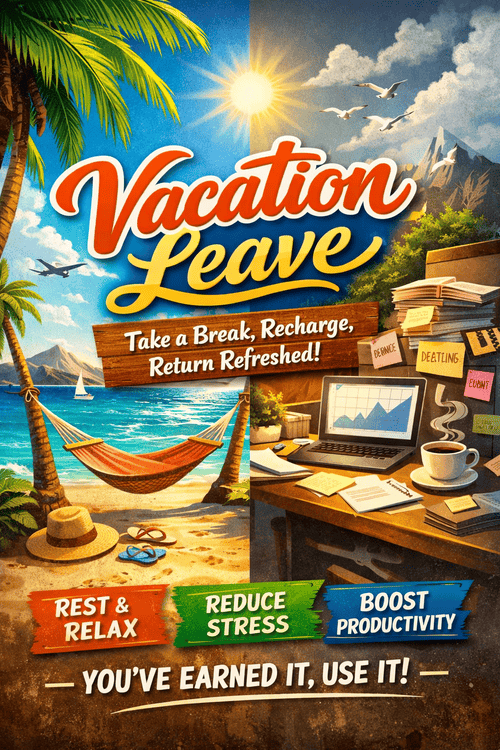
Vacation leave has a funny reputation. Some people see it as a reward. Others treat it like an inconvenience. A few even feel guilty for taking it. But when you step back and look closely, vacation leave is not about indulgence or laziness. It is about sustainability. It is about staying sharp, healthy, and genuinely present in your work and your life.
Whether you work in an office, remotely, or run your own business, time away from routine is not optional. It is essential.
What Is Vacation Leave?
Vacation leave is the portion of time an employee is officially allowed to step away from work while still receiving their regular pay. It is not an absence or a favor. It is a planned, approved break built into the employment relationship, designed to protect both productivity and wellbeing.
In most organizations, vacation leave is part of the employment package from the start. Employees earn it gradually, either month by month or as a yearly entitlement, depending on company policy and local labor laws. Some workplaces increase vacation days with length of service, recognizing loyalty and long term commitment.
What makes vacation leave important is not just the time away, but what that time allows. It gives employees the freedom to rest properly, travel, spend meaningful time with family, attend to personal responsibilities, or simply slow life down for a while. It removes the pressure of choosing between income and personal needs. You can step away without worrying about your paycheck.
From an employer’s perspective, vacation leave is not lost time. It is an investment. People who take real breaks tend to return more focused, more creative, and less burned out. Fatigue quietly drains performance, even when someone shows up every day. Time off interrupts that cycle and restores clarity and motivation.
Vacation leave also supports mental and emotional health. Constant work without pause leads to stress, resentment, and disengagement. Knowing that rest is scheduled and respected creates a healthier work culture where employees feel valued rather than used.
At its core, vacation leave is about balance. It acknowledges that people are not machines and that sustained performance requires periods of rest. When used well, vacation leave benefits everyone involved. Employees feel refreshed and respected, and organizations gain people who are energized and ready to do their best work again.
Why Vacation Leave Actually Improves Productivity
At first glance, it feels backwards. How does stepping away from work possibly make someone better at it?
The short answer is mental recovery.
When people work nonstop without meaningful breaks, performance does not collapse all at once. It slips quietly. Concentration becomes harder to maintain. Creativity feels forced. Tasks that once felt simple take longer than they should. Mistakes show up more often, not because someone stopped caring, but because their mind is tired.
Burnout rarely arrives with a warning sign. It builds slowly, hidden behind long hours and constant availability.
Vacation leave breaks that pattern.
Time away from work gives the brain room to breathe. Stress levels ease. Sleep improves. The constant mental noise settles down. With that calm comes perspective. Problems that felt overwhelming before the break often look smaller and more manageable afterward. Many people return from vacation with fresh ideas or sudden clarity about challenges they struggled with for weeks.
This happens because rest allows the mind to reset. It reconnects people with motivation instead of forcing it. Energy comes back naturally, not through pressure or deadlines.
So vacation leave does not take productivity away. It gives it back. A rested employee works with sharper focus, better judgment, and renewed enthusiasm. In the long run, time off is not a pause in performance. It is part of what sustains it.
The Emotional Benefits of Taking Vacation Leave
Productivity often gets the spotlight, but the emotional impact of vacation leave is just as important and often more lasting.
Time away from work gives the nervous system a chance to calm down. Ongoing pressure, tight deadlines, and constant expectations quietly build anxiety and chronic stress. Vacation leave interrupts that strain. Breathing feels easier. Thoughts become less rushed. Many people notice their sleep improving once the mental weight of work is lifted.
Read more The Ultimate Vacation Guide: How to Rest, Recharge, and Fall in Love with Life Again 2026
Time off also creates space for relationships and personal interests that tend to shrink during busy work periods. You reconnect with family, spend unhurried time with friends, or return to hobbies that remind you who you are outside of your role at work. Those moments restore emotional energy in a way no weekend ever quite can.
Even short vacations can make a real difference. Mood lifts. Irritability fades. Life feels more balanced again. The body relaxes, and the mind slows down enough to feel present rather than constantly pulled toward the next task.
Vacation leave helps people remember a simple truth. You are more than your job title, more than your deadlines, and more than your inbox. That sense of balance is not a luxury. It is essential for long term emotional health and a more sustainable way of working.
Vacation Leave and Work Life Balance
Work life balance is not built on slogans, posters, or well intentioned quotes. It comes from clear boundaries, and vacation leave is one of the most important boundaries employees can have.
When people are able to step away from work completely, even for a short period, it sends a powerful message. Rest is allowed. Personal life matters. You are trusted to disconnect and return when ready. That sense of permission changes how work feels on a day to day basis.
Employees who take regular vacation leave are far less likely to grow resentful toward their jobs. Instead of feeling drained and trapped, they return refreshed and more engaged. Work feels like a role they choose to show up for, not a weight they are forced to carry. This shift supports healthier communication, better teamwork, and stronger professional relationships.
From an employer’s perspective, encouraging vacation leave is a smart long term strategy. Teams with real opportunities to rest tend to have higher morale and lower turnover. People are more likely to stay in workplaces where they feel respected as human beings, not just as output generators.
Work life balance does not happen by accident. It is protected through policies that make rest possible and culture that makes it acceptable. Vacation leave sits at the center of that balance.

Common Reasons People Avoid Taking Vacation Leave
Even with all the benefits, many people still hesitate to take vacation leave. The reasons are often emotional rather than practical.
Some worry about work piling up in their absence. They imagine returning to overflowing inboxes and unresolved tasks. Others fear that stepping away might make them seem less committed or, worse, replaceable. There is also the quiet guilt many people carry, the feeling that resting is somehow wrong when colleagues are still working.
Those concerns are understandable. Modern work culture often rewards constant availability, even when it quietly drains people. But most of these fears do not hold up in reality.
Work will always be there. Projects move forward. Systems adjust. In healthy organizations, responsibilities are shared, not hoarded. And no one does their best work while running on empty for long periods of time.
Exhaustion does not prove dedication. It erodes judgment, patience, and quality. Over time, it harms both the individual and the organization.
Taking vacation leave is not a sign of weakness or lack of ambition. It is a sign of responsible self management. It shows awareness of personal limits and respect for long term performance. In the end, rest is not something you earn after burnout. It is something you use to prevent it.
How to Make the Most of Your Vacation Leave
Getting real value from vacation leave is less about where you go and more about how you approach it. Intention makes the difference.
Start by planning ahead. Wrap up urgent tasks where possible and hand over responsibilities clearly. Let colleagues know what to expect and when you will be unavailable. That preparation reduces stress before you leave and prevents unnecessary interruptions while you are away.
Read moreUnderstanding Best Vacation Billing Format: What You Are Really Paying For 2026
Boundaries matter just as much during the break itself. If your role allows it, step back from work emails and messages. Even partial disconnection helps the mind relax. Constantly checking in keeps you mentally tethered to work and limits the benefit of time off.
Equally important is letting go of guilt. Vacation leave exists for a reason. Using it does not mean you are abandoning your responsibilities. It means you are honoring the need to rest so you can return in better shape.
Vacation leave does not require an expensive trip or a packed itinerary. A calm stay at home, unhurried time with loved ones, long walks, reading, or simply sleeping without an alarm can be deeply restorative. What matters is that the time feels different from your normal routine.
The purpose of vacation leave is renewal. It is about returning with a clearer mind, steadier energy, and a sense that life feels balanced again. When approached with intention, even a short break can deliver exactly that.
Vacation Leave in Different Work Environments
How vacation leave looks can vary a lot depending on your work situation.
In traditional office roles, leave is usually formal and tracked. There are clear policies, approvals, and schedules. Taking time off is expected and often encouraged, which makes it easier to step away without worry.
For remote or freelance workers, it can feel trickier. Time off requires self discipline and planning because there is no manager marking the calendar or handling coverage. The temptation to keep working can be strong, but without intentional breaks, productivity and creativity can quietly decline.
Business owners often face the greatest challenge. Stepping away can feel impossible when the entire operation depends on you. Yet even here, scheduled breaks—no matter how brief—pay off. Stepping back allows you to see the bigger picture, make better decisions, and return with renewed focus.
No matter the work environment, the principle stays the same. If you never pause, your work eventually suffers. Building rest into your schedule is not shirking responsibility—it is an essential part of doing your best work.
Frequently Asked Questions About Vacation Leave
How many days of vacation leave should an employee take yearly?
The exact number of vacation days varies depending on company policy and local labor laws. Some organizations offer just a couple of weeks, while others provide three to four weeks or more, sometimes increasing with years of service.
Experts generally agree that employees should aim to use all the vacation leave they are entitled to each year. Skipping time off may feel productive in the short term, but over time it can contribute to burnout, reduced focus, and even health problems. Taking your full allocation helps maintain physical health, supports mental well-being, and keeps motivation and creativity high.
Ultimately, the goal is not just to check a box on a calendar. It’s to step back, recharge, and return to work ready to perform at your best.
Is it bad to take vacation leave during busy work periods?
Not at all. The key is thoughtful planning and clear communication. Letting your team know well in advance and arranging coverage can minimize disruption and keep projects on track.
In fact, taking leave during high-pressure periods can be a smart move. Busy stretches are often when stress accumulates the fastest, and stepping away—even briefly—can prevent burnout before it affects performance. Returning after a break can give you fresh perspective, renewed energy, and better focus, which benefits both you and your team.
Vacation leave is about sustaining long-term performance, not just taking time off when it feels convenient. Using it wisely, even during hectic periods, is part of responsible work management.
Can vacation leave really reduce burnout?
Yes. Taking regular, intentional breaks gives both the mind and body a chance to recover from ongoing stress. Continuous work without meaningful rest quietly builds tension, fatigue, and frustration—key ingredients for burnout.
Vacation leave interrupts that cycle. It lowers stress hormones, restores mental clarity, and allows emotional energy to rebuild. Over time, employees who use their leave consistently are far less likely to experience the exhaustion, cynicism, and disengagement that define burnout.
In short, stepping away from work isn’t just a break—it’s a form of prevention. By giving yourself time to recharge, you protect your health, your focus, and your long-term ability to perform at your best.
Should employees feel guilty about taking vacation leave?
Absolutely not. Vacation leave is not a perk—it’s part of your compensation and a tool to maintain your well being. Using it responsibly is a sign of smart self-management, not laziness.
Taking time off benefits everyone. Employees return more focused, energized, and motivated, while employers gain staff who are healthier, more engaged, and less likely to burn out. Feeling guilty for using leave you’ve earned is counterproductive. Rest is not optional—it’s essential for doing your best work.
.
What if my workplace discourages taking vacation leave?
If your workplace makes it difficult to take time off, it can quietly undermine long-term staff satisfaction, morale, and productivity. Chronic discouragement of leave often leads to burnout, higher turnover, and disengaged employees.
One approach is to have a proactive conversation with your manager about workload planning and scheduling leave. Showing that you’re thinking ahead—covering responsibilities, delegating tasks, and minimizing disruption—can make it easier for management to approve your time off.
Ultimately, rest is not negotiable for your health and performance. Even in challenging workplaces, finding ways to take vacation leave is an investment in your well-being and in the quality of the work you deliver.
Final Thoughts on Vacation Leave
Vacation leave is not about escaping responsibility. It is about honoring it.
When you rest well, you think clearly. When you disconnect, you return stronger. And when you give yourself permission to pause, you protect your ability to keep going.
Time off is not time wasted. It is time invested in your best work and your best self.
If you would like, I can also adapt this post for a company blog, HR policy page, or travel focused website while keeping the same natural tone.