
Travel Advisory Insights: What Today’s Travelers Need to Know in 2026

Travel Advisory

Travel advisory planning today goes beyond flights and hotels. It’s about understanding real-world conditions that affect your safety, comfort, and peace of mind. A Travel Advisory often skimmed or ignored is one of the most valuable tools travelers overlook.

It offers insight into current risks, local laws, health concerns, and on-the-ground realities that guidebooks miss. Used wisely, it doesn’t limit travel; it strengthens it. In a world that changes fast, a Travel Advisory turns uncertainty into confidence

This guide is designed to change that. By the end, you will understand how a .travel advisory works, why it matters more than ever, and how to use it as a smart planning tool rather than a source of fear. Whether you travel occasionally or often, this is knowledge worth having before your next booking.


What a Travel Advisory Actually Is (and What It Is Not)

A .travel advisory is an official notice issued by governments or international organizations to inform travelers about potential risks in specific destinations. These risks may include safety concerns, health issues, political instability, natural disasters, or logistical challenges such as border closures or strikes.

What it is not is a travel ban. A .travel advisory does not automatically mean “do not go.” Instead, it provides context so travelers can make informed decisions based on current conditions.

Most advisories are updated regularly, sometimes weekly or even daily, depending on events on the ground. That alone makes them far more relevant than outdated blog posts or word-of-mouth advice.


Why Travel Advisories Matter More Than Ever

Global travel has changed. Climate events are more frequent, political situations can shift quickly, and health risks do not respect borders. A .travel advisory acts as an early warning system, helping travelers avoid unpleasant surprises.

Ignoring a .travel advisory can lead to real consequences: denied travel insurance claims, restricted embassy assistance, or being caught unprepared in an emergency. On the other hand, using advisories wisely allows you to adjust routes, pack appropriately, or simply postpone a trip until conditions improve.


When You Should Check a Travel Advisory

A common mistake is checking advisories only after booking. Ideally, you should consult a .travel advisory at three key stages:

  1. Before booking – to assess whether a destination aligns with your risk tolerance.

  2. A few weeks before departure – to note changes or emerging concerns.

  3. During your trip – because conditions can evolve while you are already there.

Using a .travel advisory early often saves money and stress later.
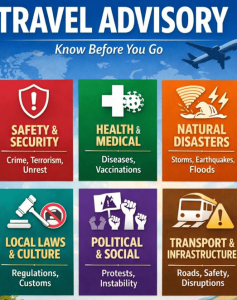

The Main Types of Risks Covered in Travel Advisories

Understanding what advisories evaluate helps you read them more clearly instead of reacting emotionally.

Safety and Security

Safety and security are often the first things people associate with travel advisories, and for good reason. Crime trends, terrorism risks, civil unrest, and the reliability of local law enforcement all shape how safe it is to move through a destination. A travel advisory brings these factors together in a way that helps travelers see the full picture, not just isolated headlines.

One of the most useful aspects of an advisory is its specificity. Rather than labeling an entire country as “safe” or “unsafe,” many advisories break risk down by region, city, or even neighborhood. A capital city may have areas that are well-policed and stable alongside others that experience higher crime or periodic unrest. That distinction allows travelers to plan intelligently instead of making broad assumptions.

Crime-related guidance often focuses on patterns rather than incidents. Advisories may note increases in pickpocketing, scams targeting tourists, or violent crime in certain districts. This kind of information helps travelers adjust behavior—choosing transportation carefully, avoiding predictable routines, or being more cautious in crowded areas—without limiting the overall experience.

Security concerns such as terrorism or civil unrest are usually addressed with similar nuance. Advisories may highlight locations prone to demonstrations, symbolic targets, or times when tensions tend to rise. Knowing this in advance allows travelers to steer clear of high-risk zones while still enjoying the rest of the destination.

Law enforcement reliability is another important factor. In some countries, response times may be slow, resources limited, or legal processes unfamiliar to visitors. Advisories often acknowledge these realities so travelers understand what level of support to expect and can plan accordingly, whether that means staying in well-established areas or ensuring access to embassy assistance.

Taken together, this information doesn’t tell you to be afraid—it tells you to be aware. A travel advisory helps you distinguish between manageable risks and areas best avoided. That clarity allows you to move with confidence, make informed choices, and focus on experiencing the destination rather than worrying about it.

Health Risks

Health concerns are a major focus of any .travel advisory, and for good reason. These notices often highlight active disease outbreaks, required or recommended vaccinations, the safety of local water supplies, and how reliable the medical system is at your destination. This kind of guidance matters even more if you’re traveling with children, older family members, or anyone managing a chronic condition. A quick read can help you decide what precautions to take, what to pack, and whether you might need extra insurance or medical planning before you go.

Not all travel risks are dramatic or obvious. Some of the most consequential issues travelers face stem from political and legal differences they didn’t anticipate. This is where travel advisories become especially valuable not as warnings of danger, but as guides to unfamiliar rules and expectations.

Many advisories highlight local laws that may surprise visitors. Restrictions on photography near government buildings, limits on public speech or demonstrations, or strict rules around social media use can catch travelers off guard. In some destinations, behavior that feels routine at home can attract serious legal consequences abroad. A travel advisory helps surface these differences before they turn into problems.

Medication rules are another common concern. Certain prescription drugs, over-the-counter medicines, or supplements that are legal elsewhere may be restricted or banned entirely in another country. Advisories often flag these issues and encourage travelers to carry documentation or seek alternatives. That small step can prevent delays, confiscation, or far more serious legal trouble at borders.

Political context also matters. Advisories may explain heightened sensitivities during elections, protests, or periods of political tension. Understanding these dynamics helps travelers avoid areas or activities that could unintentionally draw attention or place them in volatile situations. It’s less about fear and more about awareness.

What makes legal and political guidance so important is that intent rarely matters in enforcement. Claiming ignorance of the law rarely offers protection. Travel advisories exist to close that knowledge gap, especially for visitors unfamiliar with local systems or norms.

Used properly, a travel advisory acts as a quiet safeguard. It helps you respect local laws, navigate political realities, and move through a destination without unnecessary friction. That awareness doesn’t restrict your experience—it protects it, allowing you to focus on the reason you traveled in the first place.

Natural Disasters and Climate Events

Natural disasters and climate-related events have become an increasingly important part of travel planning. Hurricanes, earthquakes, floods, wildfires, heatwaves, and severe storms now influence not just where people travel, but when and how they do so. Travel advisories play a key role in translating these risks into practical guidance.

In many cases, a travel advisory doesn’t suggest canceling travel outright. Instead, it points to timing. Hurricane seasons, monsoon periods, wildfire-prone months, or peak heat windows are often predictable, even if the exact events are not. Advisories help travelers understand these patterns so they can adjust travel dates, choose alternate regions, or build flexibility into their plans.

This is especially valuable because climate-related risks are often temporary and localized. One part of a country may be dealing with flooding while another remains completely accessible. A well-written advisory highlights these distinctions, allowing travelers to reroute rather than abandon a trip altogether.

Advisories also provide insight into infrastructure resilience. Information about road closures, airport disruptions, power outages, or emergency response capacity helps travelers assess how well a destination can handle sudden events. That context matters just as much as the event itself, particularly for families, business travelers, and long-term visitors.

Ignoring climate-related advisories can lead to unnecessary stress: missed flights, inaccessible accommodations, or limited access to essential services. Using them thoughtfully, on the other hand, allows travelers to plan around risk instead of reacting to it. Sometimes that means shifting travel by a few weeks. Other times, it means choosing a different region within the same country.

As climate events become more frequent, travel advisories are less about discouragement and more about adaptation. They support smarter timing, realistic expectations, and contingency planning. When used this way, they don’t limit travel—they help ensure it happens under the best possible conditions.


How to Read a Travel Advisory Without Panic

Many travelers see cautionary language and immediately assume the worst. That reaction is understandable but often unnecessary.

A well-written travel advisory usually includes:

  • A clear risk level

  • Specific regions affected

  • Practical recommendations, not just warnings

Focus on the details, not just the headline. A travel advisory that flags issues in one region does not automatically apply to the entire country.


Common Mistakes Travelers Make With Advisories

One of the most common mistakes travelers make is treating all travel advisories as if they mean the same thing. They don’t. Advisory levels exist for a reason, and each one signals a different degree of risk. Lumping them together flattens important nuance and often leads to overreaction or, just as often, misplaced confidence.

Another frequent error is assuming a destination is unsafe simply because it has an advisory at all. In reality, nearly every country carries some form of advisory at any given time. Advisories are not exceptional—they’re routine. Their presence alone says very little unless you look at the level, the affected areas, and the specific issues being flagged.

On the flip side, some travelers dismiss advisories entirely because someone they know visited recently without any problems. This can be misleading. Travel conditions are not static. Political events, weather patterns, public health concerns, and security situations can change quickly. An experience from a few weeks or even a few days ago may no longer reflect what’s happening now. Advisories exist precisely to capture those shifts as they occur.

Another subtle mistake is reading only the headline or summary. The most useful information is often buried in the details: which neighborhoods to avoid, what times of day carry more risk, or which modes of transport are affected. Skipping that context turns a practical tool into a vague warning, which helps no one.

Some travelers also fail to connect advisories to practical planning. They read them but don’t act on them booking accommodations in flagged areas, ignoring guidance about local transportation, or failing to adjust itineraries when circumstances change. Information only works if it’s applied.

Ultimately, the biggest mistake is viewing travel advisories as either absolute stop signs or meaningless noise. They are neither. When understood properly, advisories offer situational awareness, not blanket judgments. Avoiding these common missteps allows you to use them as they’re intended: as a dynamic, informative resource that supports smarter, more confident travel decisions.


Who Benefits Most From Travel Advisories?

While every traveler should take the time to read a travel advisory, some groups gain particular value from them. For these travelers, advisories don’t just offer background information—they provide structure, clarity, and a framework for making practical decisions in unfamiliar environments.

First-time international travelers often benefit the most. When everything is new—customs procedures, local norms, transportation systems—a travel advisory helps set expectations early. It highlights common risks, points out areas that require extra caution, and reduces uncertainty before the journey even begins. That guidance can turn an overwhelming first trip into a manageable, confident experience.

Solo travelers rely heavily on awareness and planning. Without a travel companion to share decision-making or problem-solving, having a clear understanding of local conditions becomes essential. Advisories help solo travelers identify safer neighborhoods, understand transportation considerations, and recognize situations where extra caution is warranted. That knowledge supports independence without unnecessary risk.

Families traveling with children face a different set of priorities. Safety, healthcare access, and stability matter more when others depend on your decisions. Travel advisories help parents anticipate potential disruptions, locate reliable medical facilities, and plan accommodations and itineraries that minimize stress. They also support contingency planning, which is critical when traveling with young or vulnerable family members.

Business travelers on tight schedules benefit from advisories because time is often their most limited resource. Disruptions caused by strikes, protests, weather events, or security issues can derail carefully planned meetings and deadlines. Advisories offer early warnings that allow professionals to adjust travel routes, buffer schedules, or reconsider timing before problems arise.

Long-term travelers and remote workers abroad use advisories differently, but just as strategically. For those staying weeks or months, advisories provide insight into ongoing conditions rather than short-term snapshots. They help with decisions about where to base oneself, how to manage mobility, and when to adjust routines as circumstances change. This long-range awareness supports stability and sustainability over time.

For all of these groups, a travel advisory functions as more than a cautionary note. It becomes a planning resource—one that supports smarter logistics, realistic expectations, and well-prepared contingencies. Used this way, advisories don’t limit travel. They enable it.
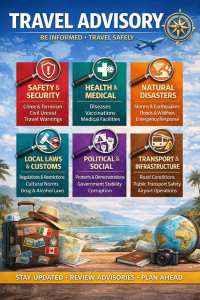

Digital Tools That Make Advisories Easier to Track

Many governments allow you to sign up for alerts so a travel advisory update is sent directly to your email or phone. These notifications can be invaluable if conditions change suddenly.

Official resources worth bookmarking include:

These sources are frequently referenced when compiling a .travel advisory and offer deeper explanations when needed.


Travel Insurance and Advisory Levels

Travel insurance doesn’t exist in a vacuum. Many policies use travel advisory levels as a reference point when deciding what is covered and what isn’t. That’s where things can get complicated—especially if you don’t look closely before you go.

In practical terms, insurers often treat a travel advisory as a risk benchmark. If an advisory is mild, coverage usually remains intact. But when an official warning reaches a higher level and you choose to travel anyway, some insurers may limit or deny certain claims. Medical expenses, trip interruption, evacuation, or cancellation benefits can all be affected, depending on how the policy is written.

This is why timing matters. If an advisory is issued after you’ve booked or already arrived, coverage may still apply. If it’s in place before you purchase insurance or depart, the insurer may argue that the risk was known and therefore excluded. Those details are easy to miss—and expensive to ignore.

Before buying a policy, it’s worth checking exactly how the provider interprets advisory levels. Some insurers reference specific government advisories. Others use their own internal risk assessments. The language is often buried in the fine print, but it directly affects whether you’re protected when something goes wrong.

Aligning your travel plans with current advisories doesn’t just reduce physical risk—it protects you financially. Choosing destinations, routes, and timing that fall within acceptable advisory levels can preserve your coverage and give you access to support when you need it most.

In the end, travel insurance is about risk management, not reassurance. A travel advisory helps define that risk. When you factor both into your planning, you’re not being overly cautious—you’re being strategic. And that strategy can make the difference between a manageable disruption and a costly one.

Frequently Asked Questions

Is a travel advisory the same as a travel ban?

No. A travel advisory and a travel ban serve very different purposes, and confusing the two can lead to unnecessary worry or missed opportunities.

A travel advisory is informational. It provides guidance, context, and risk assessment to help travelers make informed decisions. Advisories outline potential concerns—such as security issues, health risks, or local disruptions—and often include practical advice on how to travel more safely. They do not prohibit travel. You are still legally free to enter, move around, and leave the destination, assuming you meet standard entry requirements.

A travel ban, on the other hand, is a legal restriction. It prevents entry into or exit from a country or region, either entirely or for specific groups of people. Travel bans are enforced by governments and border authorities and usually stem from serious circumstances such as public health emergencies, armed conflict, or diplomatic sanctions. If a ban is in place, travel simply isn’t permitted, regardless of personal risk tolerance or preparation.

This distinction matters because advisories are about choice, while bans are about compliance. An advisory asks you to assess, plan, and adapt. A ban removes that option altogether.

Understanding the difference allows you to respond appropriately. Seeing a travel advisory should prompt research and thoughtful planning, not panic. Only a formal travel ban changes what is legally possible.

In short, a travel advisory helps you decide how to travel. A travel ban determines whether travel can happen at all. Knowing which one you’re dealing with keeps your planning grounded, realistic, and free from unnecessary confusion.

Should I cancel my trip if there is an advisory?

Not automatically. The presence of a travel advisory doesn’t mean a trip is off the table—it means it deserves a closer look. Advisories are meant to inform decisions, not make them for you. The key is understanding what the advisory actually says, not just reacting to the fact that it exists.

Start by reading the full advisory, not the summary level alone. Look at which areas are affected and why. Many advisories are highly specific, applying to certain regions, border areas, or neighborhoods rather than the entire country. If your plans don’t intersect with those locations, the practical impact on your trip may be minimal.

Next, consider the nature of the concern. Is it related to seasonal weather, political events, or localized unrest? Is it something that can be managed through timing, route changes, or accommodation choices? Some risks are situational and temporary, while others may require more substantial adjustments. Understanding that difference helps you respond proportionately instead of emotionally.

Your own comfort level matters just as much as the advisory itself. Two travelers can read the same information and make different, equally valid choices. If you’re flexible, experienced, and comfortable adapting plans on the fly, you may decide to proceed with minor adjustments. If you prefer structure and predictability, postponing or rerouting might be the better option. Neither choice is wrong.

It’s also worth factoring in practical considerations like travel insurance, cancellation policies, and refundable bookings. These can give you room to wait, monitor updates, and make a decision closer to departure rather than rushing into one too early.

In many cases, the smartest response isn’t canceling it’s adjusting. Changing neighborhoods, modifying itineraries, avoiding certain times or routes, or staying more informed during the trip can be enough to travel confidently and safely.

Ultimately, a travel advisory is a tool for decision-making, not a stop sign. When you read it carefully, assess how it intersects with your plans, and weigh it against your personal comfort and flexibility, you’re far more likely to make a choice you feel good about—before, during, and after the trip.

How often are travel advisories updated?

There’s no single schedule that governs travel advisory updates. Some are reviewed on a regular cycle often monthly or quarterly while others change the moment something significant happens. Political unrest, natural disasters, public health concerns, security incidents, or sudden policy shifts can trigger immediate revisions, sometimes within hours.

That variability is exactly why timing matters. An advisory you read weeks or months ago may no longer reflect current conditions, especially in destinations where situations evolve quickly. Elections, seasonal weather patterns, strikes, or regional conflicts can all alter the risk landscape in a short span of time.

In more stable destinations, updates tend to be routine and incremental. Language may be refined, regional details adjusted, or guidance clarified without major changes to overall risk levels. In less predictable environments, however, advisories can shift rapidly and without much warning. What was considered low-risk yesterday may require added caution today—or the reverse.

For travelers, the takeaway is simple: checking a travel advisory should happen close to departure, not just during early planning. A final review in the days leading up to your trip helps confirm that your plans still make sense and alerts you to any new developments that might require small adjustments.

It’s also wise to keep an eye on advisories while you’re already traveling. Conditions can change mid-trip, and staying informed allows you to adapt calmly rather than react under pressure. Even a brief check can provide reassurance or prompt a smart reroute before inconvenience turns into stress.

In short, travel advisories are living documents. They evolve as circumstances change. Treating them as part of your pre-departure and on-the-road routine ensures you’re always working with the most accurate picture available and that’s what keeps travel confident, flexible, and well-informed.

Do travel advisories apply to locals as well?

Travel advisories are written primarily with foreign travelers in mind, but the conditions they describe rarely affect visitors alone. In most cases, they reflect realities that local residents are already living with every day. That’s why advisories can be just as useful for understanding a destination as they are for planning logistics.

When an advisory mentions civil unrest, transportation disruptions, crime patterns, or infrastructure challenges, those issues don’t pause for tourists. Locals navigate them routinely—adjusting where they go, when they travel, and how they move through their own cities. In that sense, a travel advisory offers a window into daily life, not just visitor-specific risks.

It’s also important to recognize that advisories often simplify complex situations. A brief note about “demonstrations” might translate, on the ground, into predictable protest routes that residents avoid without much disruption. A warning about “increased petty crime” may reflect economic pressures that locals have adapted to through habits like using certain transport options, avoiding specific neighborhoods at night, or traveling in groups. Observing how residents respond can be one of the most practical guides for visitors.

At the same time, locals usually have advantages travelers do not. They understand cultural cues, speak the language, and know which warnings are serious and which are routine. Foreign travelers lack that context, which is why advisories are framed conservatively. They aim to bridge that gap by flagging issues that locals already understand intuitively.

Using a travel advisory this way changes how you approach a destination. Instead of seeing it as a list of threats, you can read it as background knowledge. It helps you align your behavior with local realities choosing safer routes, respecting sensitive situations, and avoiding actions that might seem normal at home but are unwise in a different context.

So while travel advisories are not written for residents, they absolutely reflect conditions that affect them. Reading them with that perspective adds depth to your planning and empathy to your travel. You’re not just protecting yourself—you’re gaining a clearer, more grounded understanding of the place you’re about to experience.

Using Travel Advisories as a Smart Travel Habit

When treated thoughtfully, a travel advisory becomes less of a warning sign and more of a planning tool. It’s not there to scare you away from the world, it’s there to help you move through it with your eyes open. Smart travelers don’t see advisories as obstacles. They see them as context.

At their core, travel advisories encourage three things every good traveler should already value: preparation, awareness, and respect for local conditions. They offer a snapshot of what’s happening on the ground politically, socially, environmentally so you can make informed decisions before and during your trip. That information, when used well, doesn’t limit your experience. It sharpens it.

Experienced travelers rarely cancel trips simply because an advisory exists. Instead, they adapt. They read beyond the headline and look at the details. Is the concern localized to a specific region or city? Is it time-specific, tied to an election period, seasonal weather, or a recent event? Does it affect tourists directly, or is it more relevant to long-term residents? These distinctions matter, and seasoned travelers know how to read between the lines.

Adaptation often starts with itinerary planning. You might shift your base to a safer neighborhood, choose daytime excursions over late-night outings, or replace a border-region visit with a cultural or nature-focused alternative. Sometimes it’s as simple as selecting different transportation options or booking accommodations with stronger security measures. These adjustments rarely diminish the trip. In many cases, they improve it.

Travel advisories also encourage smarter daily habits on the road. Staying informed becomes part of the routine checking local news, monitoring weather updates, and paying attention to guidance from hotel staff or local hosts. This isn’t paranoia; it’s situational awareness. Knowing what’s happening around you allows you to move confidently rather than cautiously, because your decisions are grounded in reality, not guesswork.

Another often-overlooked benefit is the way advisories foster respect for local conditions. Every destination has its own rhythms, sensitivities, and challenges. Understanding them helps you blend in, avoid unnecessary risks, and engage more thoughtfully with the place you’re visiting. You become less of a passive tourist and more of an active, considerate guest.

There’s also a psychological shift that happens when you embrace advisories as part of your travel habit. Instead of feeling anxious about the unknown, you feel prepared for it. Preparation builds confidence. Confidence makes travel more enjoyable. You’re not constantly wondering if you missed something important you know you’ve done your homework.

Ultimately, smart travel isn’t about chasing risk, nor is it about avoiding it entirely. It’s about balance. Travel advisories provide the information needed to strike that balance wisely. They don’t tell you where you can’t go; they help you decide how to go, when to go, and how to move once you arrive.

The travelers who get the most out of their journeys aren’t the ones who ignore warnings or blindly follow them. They’re the ones who engage with the information, adapt intelligently, and stay curious without being careless. When you approach travel advisories this way, they stop feeling restrictive and start feeling empowering just another tool that helps you explore the world with clarity, confidence, and respect.

Conclusion

Travel remains one of the most enriching things we can do with our lives. It expands perspective, builds empathy, and reminds us how much of the world is still waiting to be experienced. What keeps travel rewarding, sustainable, and enjoyable isn’t blind optimism or unnecessary fear it’s good information, used well.

A travel advisory is not designed to take adventure away from you. It exists to support smarter decisions, clearer planning, and safer movement. When read carefully and understood in context, it becomes less of a warning label and more of a strategic guide. It helps you anticipate challenges before they become problems and gives you the confidence to navigate unfamiliar environments with intention.

The difference lies in how you use it. Skimming headlines can create anxiety. Reading details creates clarity. A well-used advisory helps you plan smarter routes, choose accommodations wisely, understand local dynamics, and set realistic expectations. It replaces uncertainty with preparedness and preparedness is what turns travel from stressful to seamless.

Making this a habit doesn’t take much effort. Before your next trip, spend a few minutes reviewing the relevant travel advisory. Look at what applies to your specific destination, travel style, and timing. Adjust where necessary, stay informed as your trip approaches, and carry that awareness with you as you travel.

That small, consistent habit can completely change your experience. It’s often the difference between reacting to situations and calmly navigating them. Between feeling unsure and moving with confidence. Between a trip that feels tense and one that feels thoughtfully planned.

Travel will always involve the unknown that’s part of its magic. But when you pair curiosity with information, you don’t lose that magic. You protect it. And that’s how travel stays not just exciting, but deeply rewarding.

Recommended Posts