
Travel advisory planning today goes beyond flights and hotels. It’s about understanding real-world conditions that affect your safety, comfort, and peace of mind. A Travel Advisory often skimmed or ignored is one of the most valuable tools travelers overlook.
It offers insight into current risks, local laws, health concerns, and on-the-ground realities that guidebooks miss. Used wisely, it doesn’t limit travel; it strengthens it. In a world that changes fast, a Travel Advisory turns uncertainty into confidence
This guide is designed to change that. By the end, you will understand how a .travel advisory works, why it matters more than ever, and how to use it as a smart planning tool rather than a source of fear. Whether you travel occasionally or often, this is knowledge worth having before your next booking.
What a Travel Advisory Actually Is (and What It Is Not)
A .travel advisory is an official notice issued by governments or international organizations to inform travelers about potential risks in specific destinations. These risks may include safety concerns, health issues, political instability, natural disasters, or logistical challenges such as border closures or strikes.
What it is not is a travel ban. A .travel advisory does not automatically mean “do not go.” Instead, it provides context so travelers can make informed decisions based on current conditions.
Most advisories are updated regularly, sometimes weekly or even daily, depending on events on the ground. That alone makes them far more relevant than outdated blog posts or word-of-mouth advice.
Why Travel Advisories Matter More Than Ever
Global travel has changed. Climate events are more frequent, political situations can shift quickly, and health risks do not respect borders. A .travel advisory acts as an early warning system, helping travelers avoid unpleasant surprises.
Ignoring a .travel advisory can lead to real consequences: denied travel insurance claims, restricted embassy assistance, or being caught unprepared in an emergency. On the other hand, using advisories wisely allows you to adjust routes, pack appropriately, or simply postpone a trip until conditions improve.
When You Should Check a Travel Advisory
A common mistake is checking advisories only after booking. Ideally, you should consult a .travel advisory at three key stages:
-
Before booking – to assess whether a destination aligns with your risk tolerance.
-
A few weeks before departure – to note changes or emerging concerns.
-
During your trip – because conditions can evolve while you are already there.
Using a .travel advisory early often saves money and stress later.
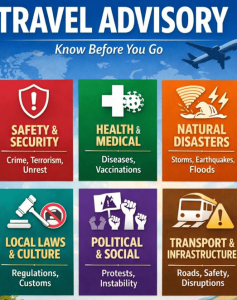
The Main Types of Risks Covered in Travel Advisories
Understanding what advisories evaluate helps you read them more clearly instead of reacting emotionally.
Safety and Security
Safety and security are often the first things people associate with travel advisories, and for good reason. Crime trends, terrorism risks, civil unrest, and the reliability of local law enforcement all shape how safe it is to move through a destination. A travel advisory brings these factors together in a way that helps travelers see the full picture, not just isolated headlines.
One of the most useful aspects of an advisory is its specificity. Rather than labeling an entire country as “safe” or “unsafe,” many advisories break risk down by region, city, or even neighborhood. A capital city may have areas that are well-policed and stable alongside others that experience higher crime or periodic unrest. That distinction allows travelers to plan intelligently instead of making broad assumptions.
Crime-related guidance often focuses on patterns rather than incidents. Advisories may note increases in pickpocketing, scams targeting tourists, or violent crime in certain districts. This kind of information helps travelers adjust behavior—choosing transportation carefully, avoiding predictable routines, or being more cautious in crowded areas—without limiting the overall experience.
Security concerns such as terrorism or civil unrest are usually addressed with similar nuance. Advisories may highlight locations prone to demonstrations, symbolic targets, or times when tensions tend to rise. Knowing this in advance allows travelers to steer clear of high-risk zones while still enjoying the rest of the destination.
Law enforcement reliability is another important factor. In some countries, response times may be slow, resources limited, or legal processes unfamiliar to visitors. Advisories often acknowledge these realities so travelers understand what level of support to expect and can plan accordingly, whether that means staying in well-established areas or ensuring access to embassy assistance.
Taken together, this information doesn’t tell you to be afraid—it tells you to be aware. A travel advisory helps you distinguish between manageable risks and areas best avoided. That clarity allows you to move with confidence, make informed choices, and focus on experiencing the destination rather than worrying about it.
Health Risks
Health concerns are a major focus of any .travel advisory, and for good reason. These notices often highlight active disease outbreaks, required or recommended vaccinations, the safety of local water supplies, and how reliable the medical system is at your destination. This kind of guidance matters even more if you’re traveling with children, older family members, or anyone managing a chronic condition. A quick read can help you decide what precautions to take, what to pack, and whether you might need extra insurance or medical planning before you go.
Political and Legal Considerations
Natural Disasters and Climate Events
Natural disasters and climate-related events have become an increasingly important part of travel planning. Hurricanes, earthquakes, floods, wildfires, heatwaves, and severe storms now influence not just where people travel, but when and how they do so. Travel advisories play a key role in translating these risks into practical guidance.
In many cases, a travel advisory doesn’t suggest canceling travel outright. Instead, it points to timing. Hurricane seasons, monsoon periods, wildfire-prone months, or peak heat windows are often predictable, even if the exact events are not. Advisories help travelers understand these patterns so they can adjust travel dates, choose alternate regions, or build flexibility into their plans.
This is especially valuable because climate-related risks are often temporary and localized. One part of a country may be dealing with flooding while another remains completely accessible. A well-written advisory highlights these distinctions, allowing travelers to reroute rather than abandon a trip altogether.
Advisories also provide insight into infrastructure resilience. Information about road closures, airport disruptions, power outages, or emergency response capacity helps travelers assess how well a destination can handle sudden events. That context matters just as much as the event itself, particularly for families, business travelers, and long-term visitors.
Ignoring climate-related advisories can lead to unnecessary stress: missed flights, inaccessible accommodations, or limited access to essential services. Using them thoughtfully, on the other hand, allows travelers to plan around risk instead of reacting to it. Sometimes that means shifting travel by a few weeks. Other times, it means choosing a different region within the same country.
As climate events become more frequent, travel advisories are less about discouragement and more about adaptation. They support smarter timing, realistic expectations, and contingency planning. When used this way, they don’t limit travel—they help ensure it happens under the best possible conditions.
How to Read a Travel Advisory Without Panic
Many travelers see cautionary language and immediately assume the worst. That reaction is understandable but often unnecessary.
A well-written travel advisory usually includes:
-
A clear risk level
-
Specific regions affected
-
Practical recommendations, not just warnings
Focus on the details, not just the headline. A travel advisory that flags issues in one region does not automatically apply to the entire country.
Common Mistakes Travelers Make With Advisories
One of the most common mistakes travelers make is treating all travel advisories as if they mean the same thing. They don’t. Advisory levels exist for a reason, and each one signals a different degree of risk. Lumping them together flattens important nuance and often leads to overreaction or, just as often, misplaced confidence.
Another frequent error is assuming a destination is unsafe simply because it has an advisory at all. In reality, nearly every country carries some form of advisory at any given time. Advisories are not exceptional—they’re routine. Their presence alone says very little unless you look at the level, the affected areas, and the specific issues being flagged.
On the flip side, some travelers dismiss advisories entirely because someone they know visited recently without any problems. This can be misleading. Travel conditions are not static. Political events, weather patterns, public health concerns, and security situations can change quickly. An experience from a few weeks or even a few days ago may no longer reflect what’s happening now. Advisories exist precisely to capture those shifts as they occur.
Another subtle mistake is reading only the headline or summary. The most useful information is often buried in the details: which neighborhoods to avoid, what times of day carry more risk, or which modes of transport are affected. Skipping that context turns a practical tool into a vague warning, which helps no one.
Some travelers also fail to connect advisories to practical planning. They read them but don’t act on them booking accommodations in flagged areas, ignoring guidance about local transportation, or failing to adjust itineraries when circumstances change. Information only works if it’s applied.
Ultimately, the biggest mistake is viewing travel advisories as either absolute stop signs or meaningless noise. They are neither. When understood properly, advisories offer situational awareness, not blanket judgments. Avoiding these common missteps allows you to use them as they’re intended: as a dynamic, informative resource that supports smarter, more confident travel decisions.
Who Benefits Most From Travel Advisories?
While every traveler should take the time to read a travel advisory, some groups gain particular value from them. For these travelers, advisories don’t just offer background information—they provide structure, clarity, and a framework for making practical decisions in unfamiliar environments.
First-time international travelers often benefit the most. When everything is new—customs procedures, local norms, transportation systems—a travel advisory helps set expectations early. It highlights common risks, points out areas that require extra caution, and reduces uncertainty before the journey even begins. That guidance can turn an overwhelming first trip into a manageable, confident experience.
Solo travelers rely heavily on awareness and planning. Without a travel companion to share decision-making or problem-solving, having a clear understanding of local conditions becomes essential. Advisories help solo travelers identify safer neighborhoods, understand transportation considerations, and recognize situations where extra caution is warranted. That knowledge supports independence without unnecessary risk.
Families traveling with children face a different set of priorities. Safety, healthcare access, and stability matter more when others depend on your decisions. Travel advisories help parents anticipate potential disruptions, locate reliable medical facilities, and plan accommodations and itineraries that minimize stress. They also support contingency planning, which is critical when traveling with young or vulnerable family members.
Business travelers on tight schedules benefit from advisories because time is often their most limited resource. Disruptions caused by strikes, protests, weather events, or security issues can derail carefully planned meetings and deadlines. Advisories offer early warnings that allow professionals to adjust travel routes, buffer schedules, or reconsider timing before problems arise.
Long-term travelers and remote workers abroad use advisories differently, but just as strategically. For those staying weeks or months, advisories provide insight into ongoing conditions rather than short-term snapshots. They help with decisions about where to base oneself, how to manage mobility, and when to adjust routines as circumstances change. This long-range awareness supports stability and sustainability over time.
For all of these groups, a travel advisory functions as more than a cautionary note. It becomes a planning resource—one that supports smarter logistics, realistic expectations, and well-prepared contingencies. Used this way, advisories don’t limit travel. They enable it.
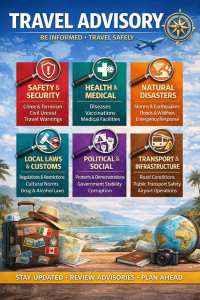
Digital Tools That Make Advisories Easier to Track
Many governments allow you to sign up for alerts so a travel advisory update is sent directly to your email or phone. These notifications can be invaluable if conditions change suddenly.
Official resources worth bookmarking include:
-
U.S. Department of State Travel Advisories: https://travel.state.gov
-
UK Foreign, Commonwealth & Development Office: https://www.gov.uk/foreign-travel-advice
-
World Health Organization travel updates: https://www.who.int
-
Centers for Disease Control and Prevention: https://wwwnc.cdc.gov/travel
These sources are frequently referenced when compiling a .travel advisory and offer deeper explanations when needed.